
Something Powerful

Tell The Reader More

The headline and subheader tells us what you're offering, and the form header closes the deal. Over here you can explain why your offer is so great it's worth filling out a form for.

Remember:

  • Bullets are great
  • For spelling out benefits and
  • Turning visitors into leads.

Materials of Construction

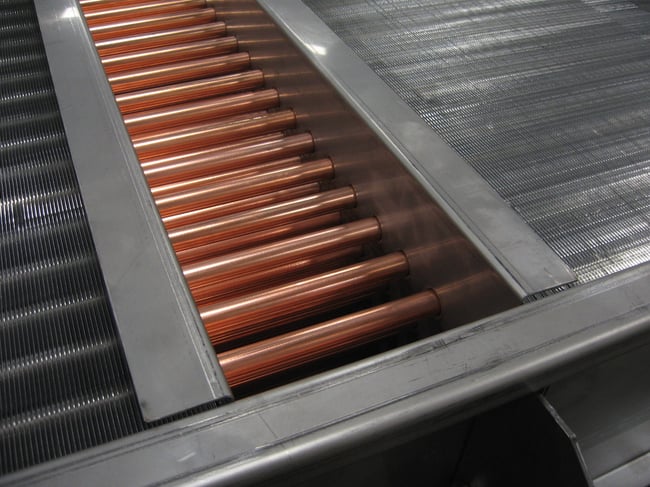
Whether cost is your chief concern or durability is at the top of your priority list, we can work with you to find the materials that offer the best balance of performance, size, cost, durability, and more. 

From fabrication equipment to skilled tradespeople with specialized certifications, our shop is designed to produce products with repeatable, scalable quality, regardless of material selection.

Whether you need the 'typical' copper and aluminum design, all-stainless steel, or something in between, we can design and build the heat exchanger you need, purpose-built for the job you need it to do. 

Picture1-min

Copper

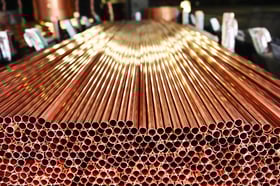
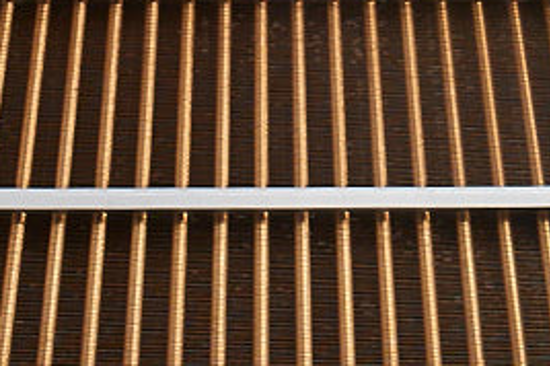
Among the most thermally conductive materials on Earth, copper is the ideal choice if heat transfer effectiveness is your primary goal. Tubes are the most common use for copper, but SRC offers copper fins if specified. 

Tube OD Offerings*

  • 5mm
  • 7mm
  • 5/16"
  • 3/8"
  • 1/2"
  • 5/8"
  • 7/8"
  • 1"

Fin Thickness Offerings

  • .0045"
  • .0055"
  • .0075"
  • .0080"
  • .0120"
  • .0160"
  • .020"
  • .025"

*SRC offers UL-listed copper tube options up to 1,740 PSIG.

IMG_0053

Aluminum

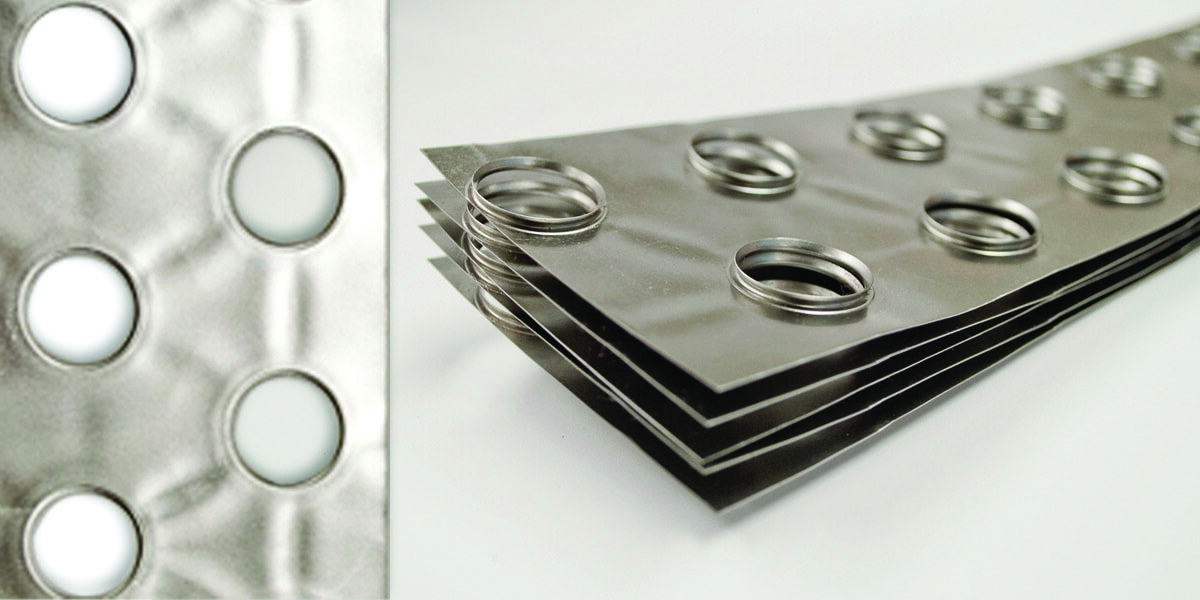
An ideal choice for fin material if cost reduction is your top priority. Aluminum offers an excellent balance between lower cost and solid heat transfer performance, and is a favorite of HVAC OEMs, especially when paired with copper tube construction.

Fin Thickness Offerings

  • .0045"
  • .0055"
  • .0075"
  • .0080"
  • .0120"
  • .0160"
  • .020"
  • .025"
  • .032"
flat-fin-min

Stainless Steel (304 & 316)

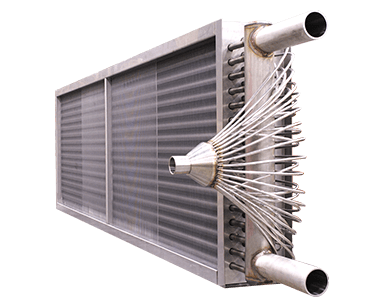
While a relatively poor conductor of heat, stainless steel shines in applications where durability/corrosion protection is the top priority. Our stainless steel customers tend to install their coils in applications featuring high pressures, high temperatures, or caustic operating environments. We offer 'standard' stainless alloys like 304 and 316, and can also provide coils made from exotic stainless alloys like AL-6XN, Hastelloy C-276, and others. Stainless steels can be used for tubes, fins, and casings, among other components.

Tube OD Offerings:

  • 3/8"
  • 1/2"
  • 5/8"
  • 7/8"
  • 1"

Fin Thickness Offerings:

  • .0055"
  • .0080"
  • .010"
  • .014"
  • .016"
Stainless-Steel-Evaporator_2-flip-min

Carbon Steel

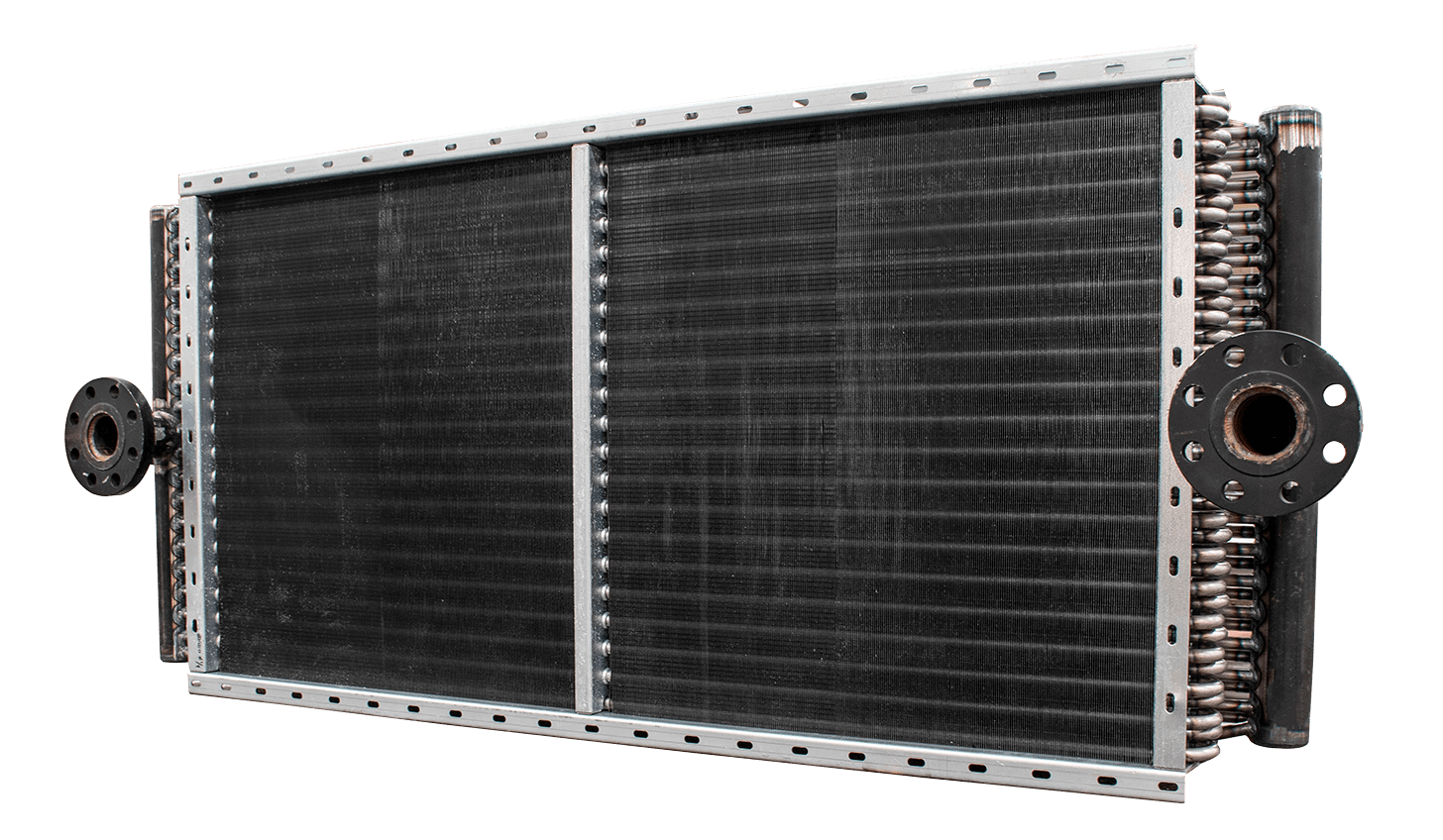
A popular choice for applications where durability is a chief consideration, carbon steel excels in high-pressure applications, but is less corrosion resistant than stainless. At SRC, carbon steel can be used for fins, tubes, headers, and other components. 

Tube OD Offerings:

  • 3/8"
  • 1/2"
  • 5/8"
  • 7/8"
  • 1"

Fin Thickness Offerings:

  • .0055"
  • .0080"
  • .010"
  • .0120"
  • .0140"
  • .025"
  • .032"
Buhler_Steam_DSC_3730-edits-min

Copper Nickel (Cupronickel)

Copper nickel is a family of copper-based alloys containing nickel. Known for its combination of corrosion resistance and thermal conductivity, the material is well suited for a variety of heat exchanger applications, especially those involving seawater and marine environments.

Tube OD Offerings:

  • 3/8"
  • 1/2"
  • 5/8"
  • 7/8"
  • 1"
Copper Nickel Fins
IMG_0053

Copper

flat-fin-min

Aluminum

Stainless-Steel-Evaporator_2-flip-min

Stainless Steel (304 & 316)

Buhler_Steam_DSC_3730-edits-min

Carbon Steel

Copper Nickel Fins

Copper Nickel (Cupronickel)


Corrugated

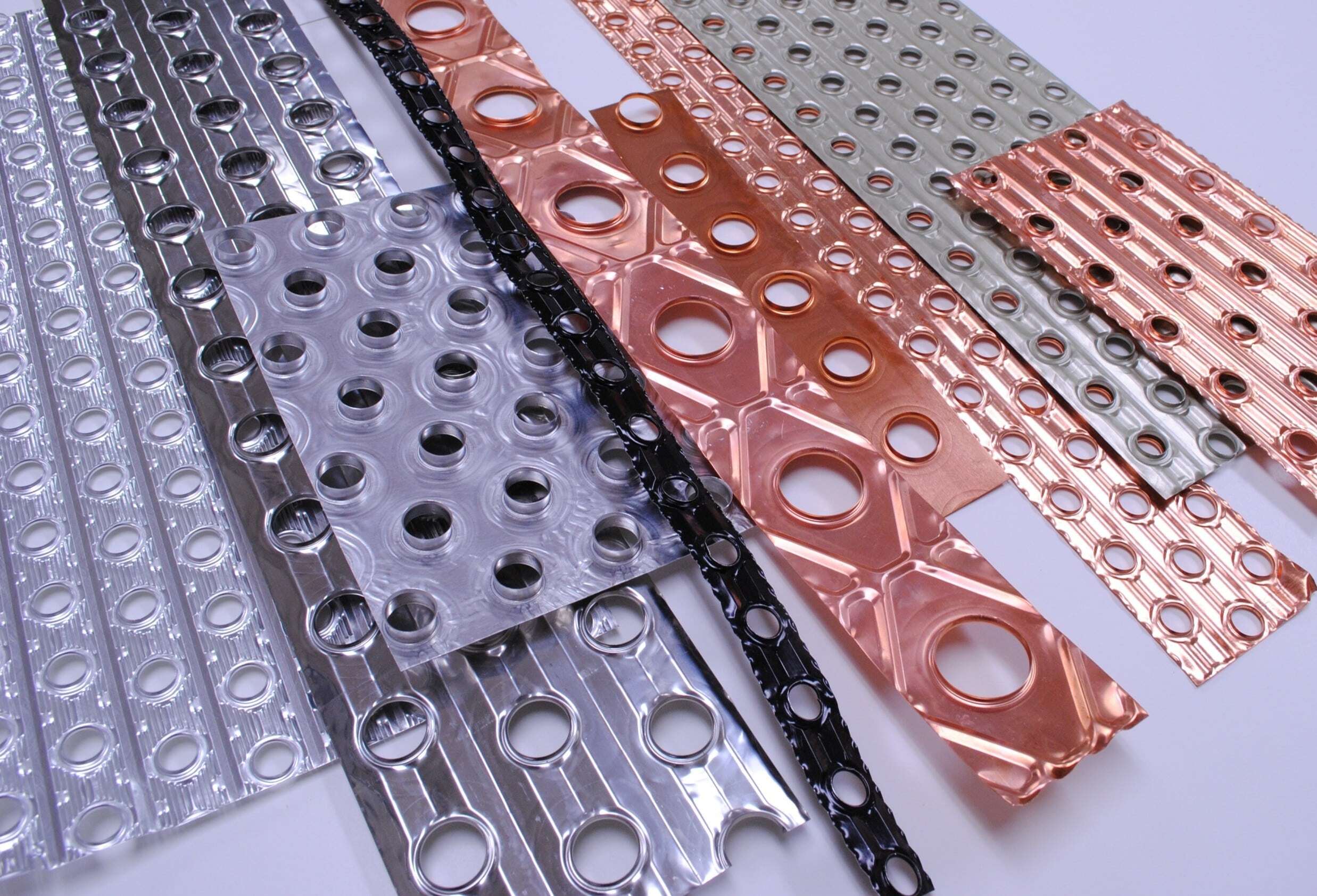
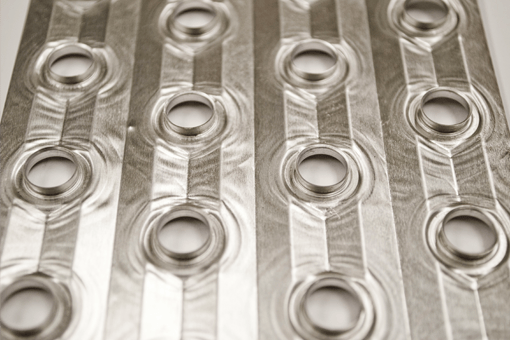
The pattern on a corrugated fin looks like a zigzag line or repeating “w” when viewed from the side. This washboard-like configuration enhances heat transfer performance and increases air friction.

Fin damage can be combed out fairly easy with a fin comb. For applications that require a heavier duty fin pack, higher fins per inch (FPI) or gauges is recommended.

Heat transfer: Moderate

Fouling/cleanability: Moderate

Durability: Poor to moderate

Sine-Wave-Fin-3

Sine Wave

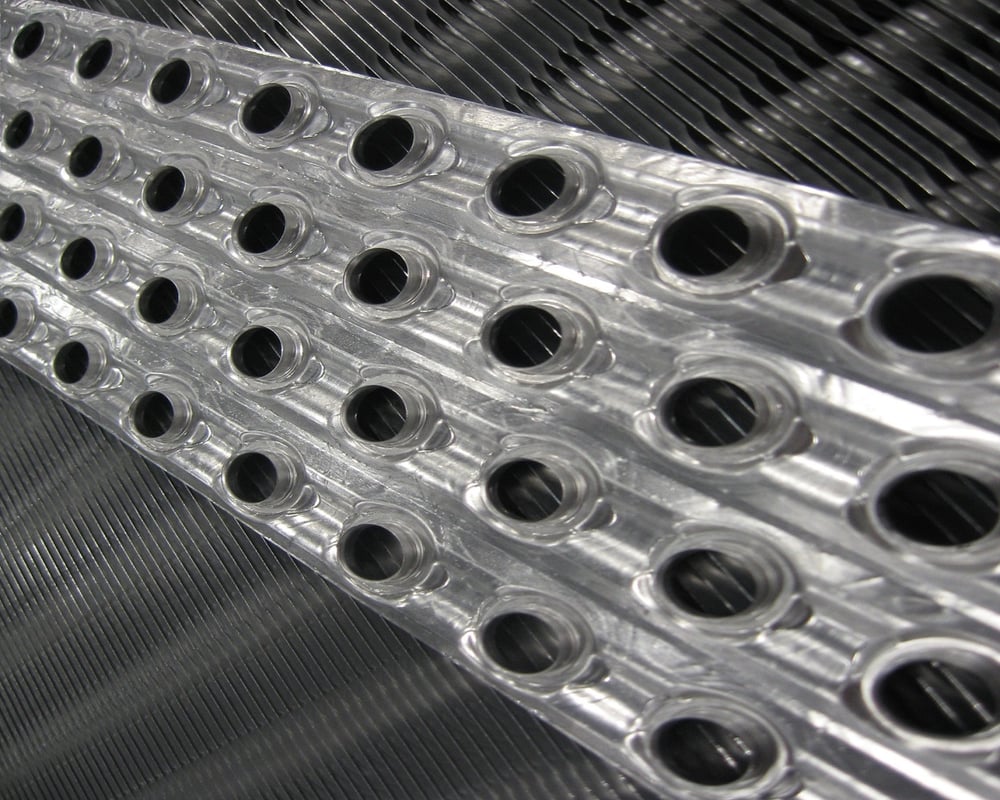
Sine fins increase air turbulence by way of a wave-like surface design. Relative to the corrugated fin, sine fins provide superior heat transfer performance, but also added air friction. This means that more fan horsepower is required as a means of compensating for the increased airside pressure drop.

Like their corrugated counterparts, sine waves suffer from below average durability, which can be remediated using higher fin densities and thicker fin gauges.

Heat transfer: Good

Fouling/cleanability: Moderate

Durability: Moderate

Sine fin-1

Raised Lance

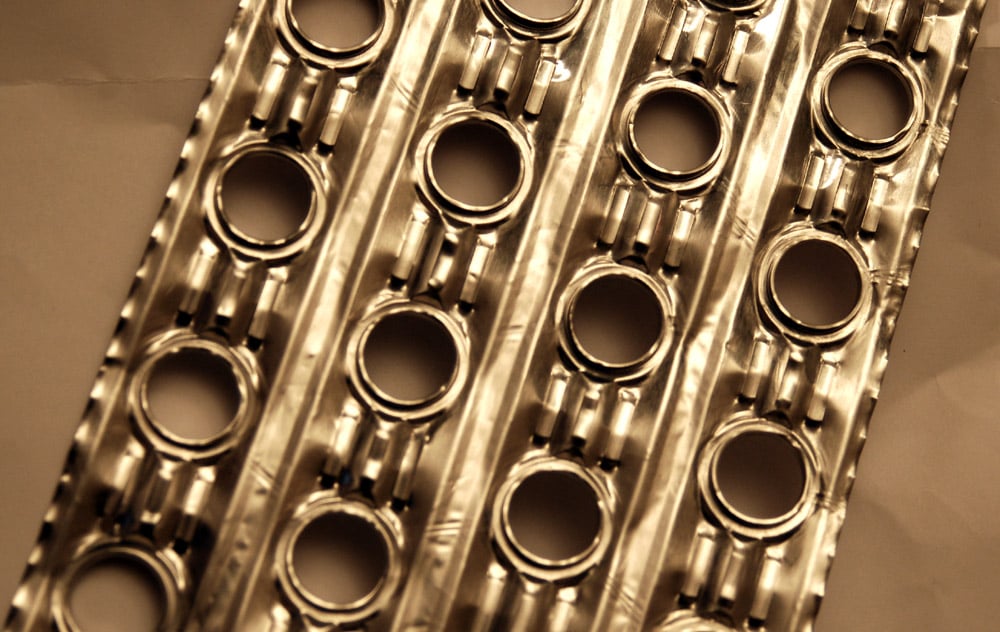
Raised lance fins provide the best heat transfer performance of the fin enhancements covered in this post, but they also create the highest airside pressure drop. Raised lance fins are successfully used for applications like evaporators and data center cooling.

Raised lance fins have a pattern of short strips of the original fin material that are cut and raised above the fin’s surface. This enhancement allows air to flow through the fin as well as around it, which works to increase air turbulence.

There are numerous patterns of raised lance fins and due to the complexity of their detailed design, raised lance fins are more susceptible to fouling and aren’t very practical in dirty environments.

Heat transfer: Excellent

Fouling/cleanability: Poor

Durability: Poor

DSC_0053

Louvered

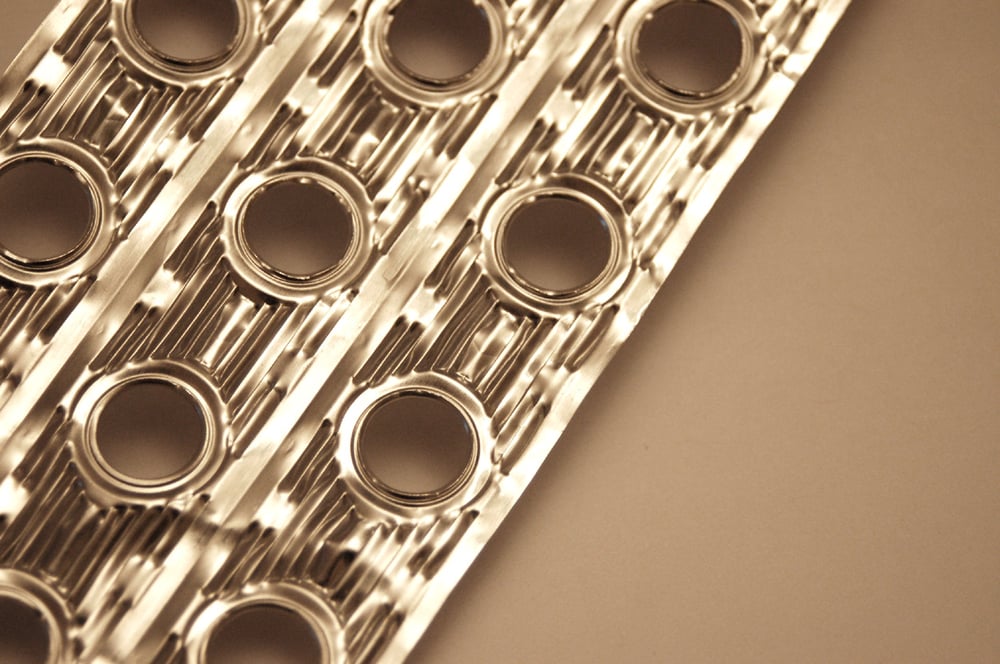
Louvered fins have sets of notches made in a common orientation, which are designed to unidirectionally increase air’s turbidity. Increasing the severity of the louvers’ angles increase heat transfer performance up to a certain point, at which the effectiveness will start to decrease.

Heat transfer: Excellent

Fouling/cleanability: Poor

Durability: Moderate

x fin
Sine-Wave-Fin-3

Corrugated

Sine fin-1

Sine Wave

DSC_0053

Raised Lance

x fin

Louvered

See What Makes Us Super

New Project (81)

Design Options

  • Cleanable return bends 
  • Bare tube for contaminated environments
  • Pitched
  • Integrated drain pans
  • Split core
  • Removable water box
  • Removable headers

iStock-174784836

Materials of Construction

Reliability-Small-v1-1

Engineering Capability

We typically think of fluid that is transported through the tubes as water, ethylene glycol, propylene glycol or thermal oil such as Dowtherm. However, fluid coils are also used for gases such as air, nitrogen or methane. 

In either case, Super Radiator Coils engineers are ready and armed with experience, knowledge and resources. And the Enterprise program, SRC's coil selection software, is a powerful tool that enables you to design your own heat exchanger.

We’re fluent in answers

Need someone who understands your language? Simply answer a few questions and we’ll get our engineers on it. 

Give us a Call